Ceiling fans makes things cool and comfortable with soothing breezes that your central air simply can’t offer. While sometimes overlooked in favor of the all-important central AC system here in Melbourne, FL, the truth is that a ceiling fan is an extraordinary supplemental cooling tool. It can help you to enjoy good airflow, comfort, and energy efficiency at your home.
Of course, the right placement is crucial. Putting a ceiling fan in the wrong spot can create dead zones and uneven cooling. With Florida’s heat and humidity feeling overwhelming at times, a well-placed ceiling fan may be the best-kept secret you’ve been overlooking. Read on to learn how fan size, ceiling height, and room layout all matter.
Quick Takeaways
- Ceiling fans should be installed near a room’s center for optimally balanced airflow.
- Keep fan blades 8 to 9 feet above the floor when possible.
- Aim for 18 inches between blades and wall.
- Size your fan up or down based on room dimensions.
- Switch up your fan direction for summer versus winter airflow.
- Use professional fan installation in Melbourne, FL for safety and performance.
Where Should a Ceiling Fan Be Placed for Best Airflow?
Place a ceiling fan in the center of a room 8 to 9 feet from the floor. Do your best to keep at least 18 inches between your fan blades and any walls, light fixtures, or tall furniture.
Seasonally, switch between setting the fan counterclockwise for a direct breeze in the summer and using a clockwise setting at low speed in the winter to bring warm air down.
Best Ceiling Fan Height for Air Circulation
The ideal mounting height for a ceiling fan is 8 to 9 feet from the floor. For safety purposes, a fan’s blades cannot be lower than 7 feet from the floor. If your home has vaulted ceilings, a professional fan installer can use something called a downrod to bring a fan down to the ideal range. A downrod is a simple metal extender that helps to drop the fan lower for better airflow without changing the aesthetics.
How Room Size Affects Ceiling Fan Placement
Ideal placement for ceiling fans in Florida can vary based on a room’s configuration. Here are some tips for optimizing airflow for rooms of all dimensions.
Small Bedrooms and Offices
In more compact rooms, a single ceiling fan in the center of the room can be ideal. However, this can be adjusted if there’s a window on one side of the room that’s less than two feet from where center placement would be. Ideally, you want to give a ceiling fan at least 2 feet of distance from a window to allow more air to be pulled in.
Living Rooms and Open Floor Plans
For large living rooms or homes with open floor plans, add multiple ceiling fans for a compounding cooling effect. In large rooms, ceiling fans should be spaced out around 4 feet apart for better aesthetics and turbulence prevention. Most interior designers suggest spacing ceiling fans so that the distance between each one is around three times the blade diameter of the design you’ve chosen.
Covered Patios and Outdoor Spaces
An outdoor fan for a covered patio or outdoor entertainment space should generally follow all the same rules for interior placement. This looks like mounting the fan 8 to 9 feet above the ground while still maintaining 18 feet from any walls, posts, or other architectural features. When adding multiple fans, outdoor fans should be around 10 feet apart for consistent cooling. Center a fan over a dining area if possible.
Common Ceiling Fan Placement Mistakes
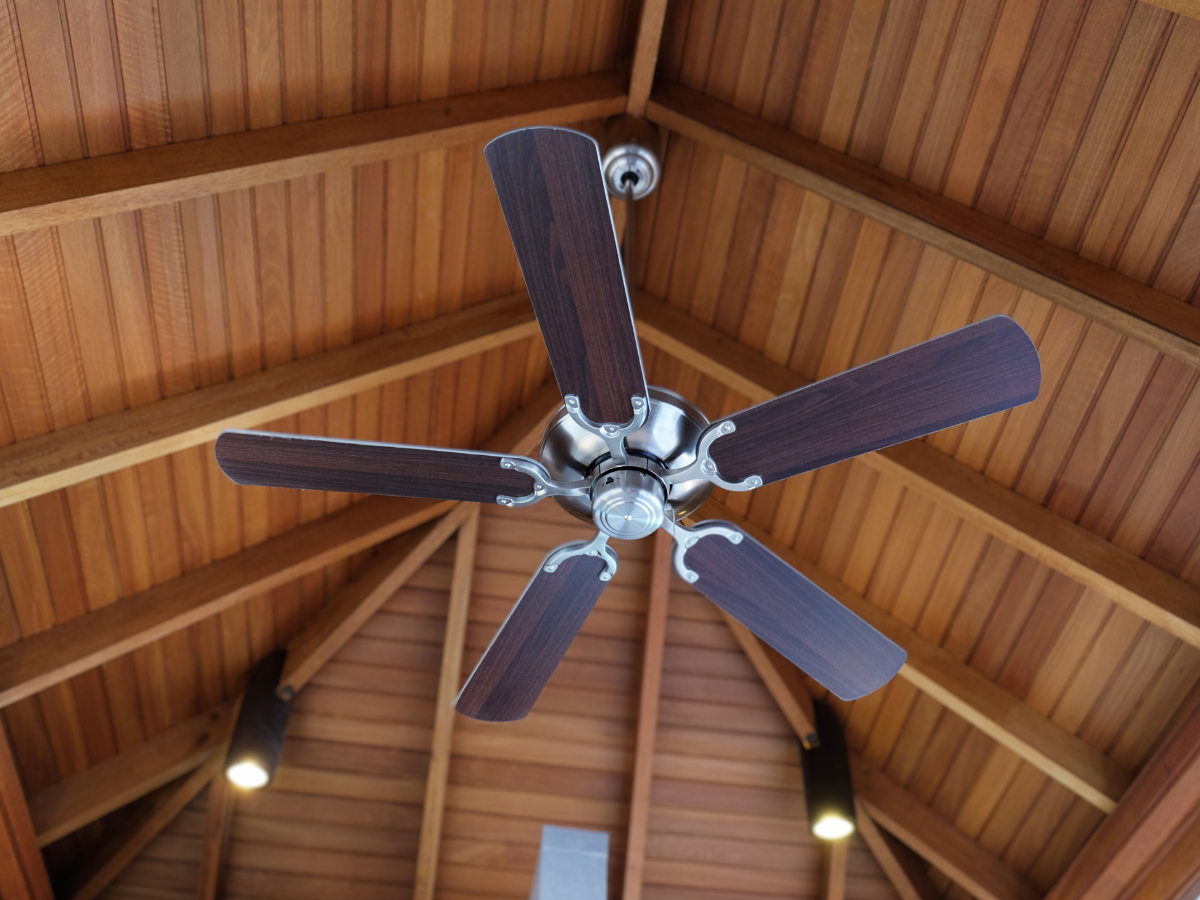 Here are some common mistakes homeowners make with DIY ceiling fan installation:
- Installing too close to walls: “Boxing in” a fan creates noisiness and reduces a fan’s energy efficiency and performance. .
- Choosing the wrong fan size: A fan that’s too large for a space can make a room feel windy. A fan that’s too small can do a poor job of creating airflow.
- Mounting too high or too low: A fan that’s too close to the ceiling won’t draw in enough air to actually cool a room. A fan that’s too low can be menacing and create actual safety risks.
- Ignoring furniture layout: Consider how a fan looks in relation to furniture. In addition, you want to make sure that a fan isn’t directly over a bed or desk that a child might climb on.
- Blocking airflow with décor or beams: A cluttered area around a mounted ceiling fan can dramatically reduce efficiency.
Ceiling Fan Direction and Airflow Efficiency
Fan direction should be switched out once a year. In the summer, counterclockwise movement ensures maximum cooling power to allow you to turn down your home’s thermostat. Counterclockwise flow activates something called the windchill effect that causes air to move across your skin and cool you down by up to 5 degrees.
By switching your fan’s direction, you can create a downdraft effect that allows you to optimize wind chill to save on your overall energy costs. In the winter, you want to switch to clockwise flow to pull down warmer air.
Does Proper Ceiling Fan Placement Save Energy?
Here’s why many homeowners with well-placed ceiling fans can actually save around 20% to 30% on their home energy bills:
- Optimal ceiling fan placement reduces AC strain.
- You can stay comfortable while keeping your thermostat settings higher.
- Fans give you better airflow in a humid climate like Melbourne, FL.
Why Professional Ceiling Fan Installation Matters
You want to make sure that your ceiling fan is snug, secure, and ready to provide exceptional cooling power. Here’s why professional installation beats DIY for homeowners:
- Secure mounting done with expertise.
- Proper electrical connections that are safe and up to code.
- Expert fan balancing and support.
Mister Sparky’s ceiling fan installation service in Melbourne, FL ensures you don’t have to climb up on a ladder or wrestle a heavy ceiling fan to get the cooling you want. Your new fan can look good, perform flawlessly, and bring better airflow for years to come.
FAQ
Where is the best place to put a ceiling fan in a room?
Ceiling fans should be placed in the center of the room at least 8 or 9 feet height.
How far should a ceiling fan be from the ceiling?
Give at least 18 inches on all sides of your fan blades.
Can a ceiling fan be too big for a room?
Yes, a ceiling fan that’s too big for a room can create extra noise and an overpowering draft. It can also look visually awkward.
Should ceiling fans go in every room?
Yes, many homeowners in Melbourne, FL put ceiling fans in every room to reduce dependency on AC and save on energy bills. Popular ceiling fan spots in Florida homes include bedrooms, living rooms, patios, and garages.
Do ceiling fans help lower electric bills?
Yes, ceiling fans can lower energy bills by allowing you to set your AC thermostat lower.
Need Ceiling Fan Installation in Melbourne, FL?
 It’s time to get your home effortlessly cooler and optimize airflow! Mister Sparky’s ceiling fan installation services ensure every fan is right where it should be for the best visual appeal and performance.
We’ve helped homeowners all over Melbourne, FL and surrounding areas naturally tap into the wonders of well-placed ceiling fans to enjoy balanced airflow, safer installation, and year-round comfort. Get ceiling fan installation right the first time with Melbourne’s on-time electrician.